> ## Documentation Index
> Fetch the complete documentation index at: https://docs.tavily.com/llms.txt
> Use this file to discover all available pages before exploring further.
# Make
> Tavily is now available for no-code integration through Make.
## Introduction
Integrate [Tavily with Make](https://www.make.com/en/integrations/tavily) to enhance your business processes without writing a single line of code. With Tavily's powerful search and content extraction capabilities, you can seamlessly integrate real-time online information into your Make workflows and automations.
 ## How to set up Tavily with Make
[Log in](https://www.make.com/en/login) to your Make account.
Create a new scenario and select a trigger module that will start your workflow.
Add Tavily as an action module in your scenario and choose between **Perform a Search** or **Extract Raw Content**:
**Connection:** Connect your Tavily account by entering your [Tavily API key](https://app.tavily.com/home).
**Configuration:** Set up your parameters:
**For Search:**
* Enter your search `query` (can be manually entered or populated from another module's output)
* Select a `topic` (`general` or `news`)
* Choose whether to include raw content or generate an answer
* Specify domains to include or exclude
* Set search depth and other optional parameters
**For Extract:**
* Enter the URL(s) to extract content from (can be a single URL or multiple URLs from another module's output)
* Choose extraction type (`basic` or `advanced`)
**Test:** Run a test to verify your configuration.
Utilize the search results in your workflow:
* Process data through additional modules
* Send information to your CRM or database
* Generate reports or notifications
* Feed data into AI models for further processing
## Use cases for Tavily in Make
Leverage Tavily's capabilities to create powerful automated workflows:
* **Competitive Intelligence**: Automatically gather and analyze competitor information
* **Market Research**: Track industry trends and market developments
* **Content Curation**: Collect and organize relevant content for your business
* **Lead Enrichment**: Enhance lead data with real-time information
* **News Monitoring**: Stay updated with the latest developments in your field
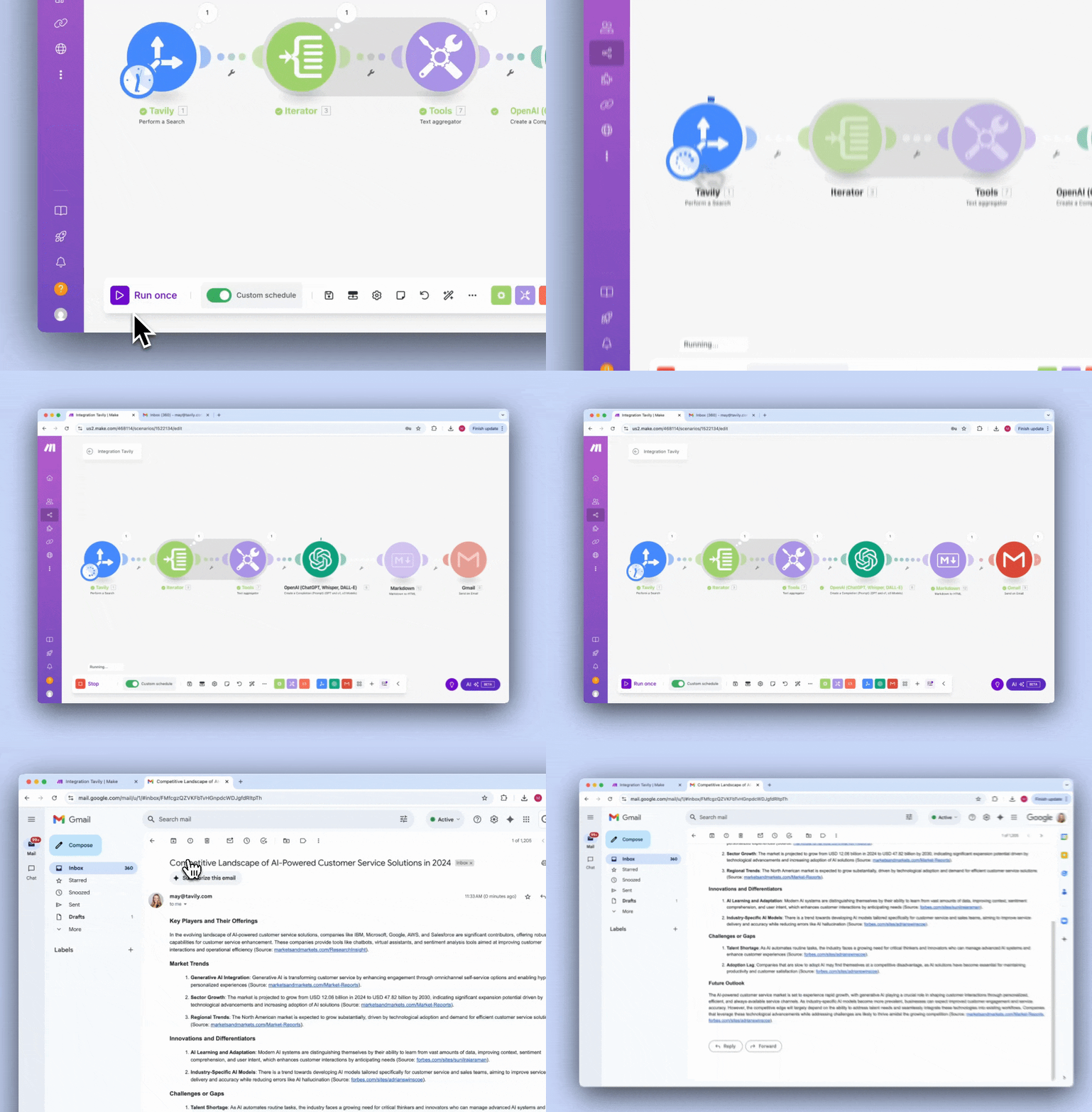
## Detailed example - automated market research
Create an automated workflow that performs market research and delivers insights to your team.
1. **Trigger:** Schedule the scenario to run daily or weekly
2. **Generate Search Queries:** Use an AI module to create relevant search queries
3. **Execute Searches:** Use Tavily to perform multiple searches with the generated queries
4. **Process Results:** Filter and organize the search results
5. **Generate Report:** Use an AI module to create a comprehensive report
6. **Deliver Insights:** Send the report via email or to your team's communication platform
## Best practices
To optimize your Tavily integration in Make:
* Use the Iterator module to process multiple search results efficiently
* Use filters to process only relevant results
* Use the Aggregator module to combine multiple search results
## How to set up Tavily with Make
[Log in](https://www.make.com/en/login) to your Make account.
Create a new scenario and select a trigger module that will start your workflow.
Add Tavily as an action module in your scenario and choose between **Perform a Search** or **Extract Raw Content**:
**Connection:** Connect your Tavily account by entering your [Tavily API key](https://app.tavily.com/home).
**Configuration:** Set up your parameters:
**For Search:**
* Enter your search `query` (can be manually entered or populated from another module's output)
* Select a `topic` (`general` or `news`)
* Choose whether to include raw content or generate an answer
* Specify domains to include or exclude
* Set search depth and other optional parameters
**For Extract:**
* Enter the URL(s) to extract content from (can be a single URL or multiple URLs from another module's output)
* Choose extraction type (`basic` or `advanced`)
**Test:** Run a test to verify your configuration.
Utilize the search results in your workflow:
* Process data through additional modules
* Send information to your CRM or database
* Generate reports or notifications
* Feed data into AI models for further processing
## Use cases for Tavily in Make
Leverage Tavily's capabilities to create powerful automated workflows:
* **Competitive Intelligence**: Automatically gather and analyze competitor information
* **Market Research**: Track industry trends and market developments
* **Content Curation**: Collect and organize relevant content for your business
* **Lead Enrichment**: Enhance lead data with real-time information
* **News Monitoring**: Stay updated with the latest developments in your field
## Detailed example - automated market research
Create an automated workflow that performs market research and delivers insights to your team.
1. **Trigger:** Schedule the scenario to run daily or weekly
2. **Generate Search Queries:** Use an AI module to create relevant search queries
3. **Execute Searches:** Use Tavily to perform multiple searches with the generated queries
4. **Process Results:** Filter and organize the search results
5. **Generate Report:** Use an AI module to create a comprehensive report
6. **Deliver Insights:** Send the report via email or to your team's communication platform
## Best practices
To optimize your Tavily integration in Make:
* Use the Iterator module to process multiple search results efficiently
* Use filters to process only relevant results
* Use the Aggregator module to combine multiple search results